Support and resistance zones – and why they wear out
Why zones work better than single lines, what happens each time price comes back, and a simple way to rate zones as fresh, tested or worn.

Support and resistance are price areas where the market reacted before: it stopped falling, stopped rising, or turned. Traders watch them because reactions often repeat – but not forever.
Zones, not lines
Price rarely turns at the exact same tick twice. Orders sit spread over a range, wicks overshoot, and different traders draw the level slightly differently. That is why an area – a zone with an upper and a lower edge – usually describes the reaction better than a single line.
How a zone forms
A zone usually starts at a strong turn: price leaves an area quickly, and the last bars before the move mark the zone. Its edges come from those bars, for example from their bodies and wicks.
Why zones wear out
A widely used idea is that every return to a zone uses up some of the interest that was waiting there. The first test often meets the most orders. With every further test there is less left, and a break becomes more likely. A zone that has been hit many times is not stronger – it is often weaker.
Fresh, tested, worn
- Fresh: price has not come back to the zone since it formed.
- Tested: price has come back once or a few times and the zone held.
- Worn: price has hit the zone so often that a break is more likely than another clean reaction.
This rating shows at a glance how much a zone has already been used – so you can tell a fresh zone from a worn one immediately.
When a zone breaks
When price closes clearly through a zone, the zone has done its job. Often the area flips: broken resistance can act as support later, and broken support as resistance. Treat a flipped zone as a new zone with its own history.
Practical tips
- Zones from higher timeframes carry more weight than zones from very low ones.
- Fewer zones are better. A chart full of zones shows everything and nothing.
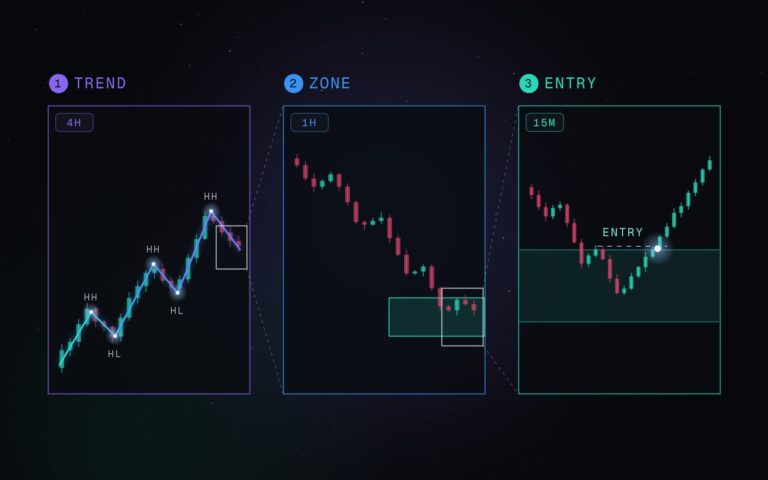
- Combine zones with market structure: a zone in the direction of the trend is a different situation from one against it.
- Zones mark the areas worth watching – your trading plan defines what you do there.
Educational content. It is not investment advice and not a recommendation to buy or sell. Risk disclosure