Premium and discount: buying low within the range
How to split a price range at the 50 % level, why traders buy in discount and sell in premium, and where the optimal trade entry zone lies.
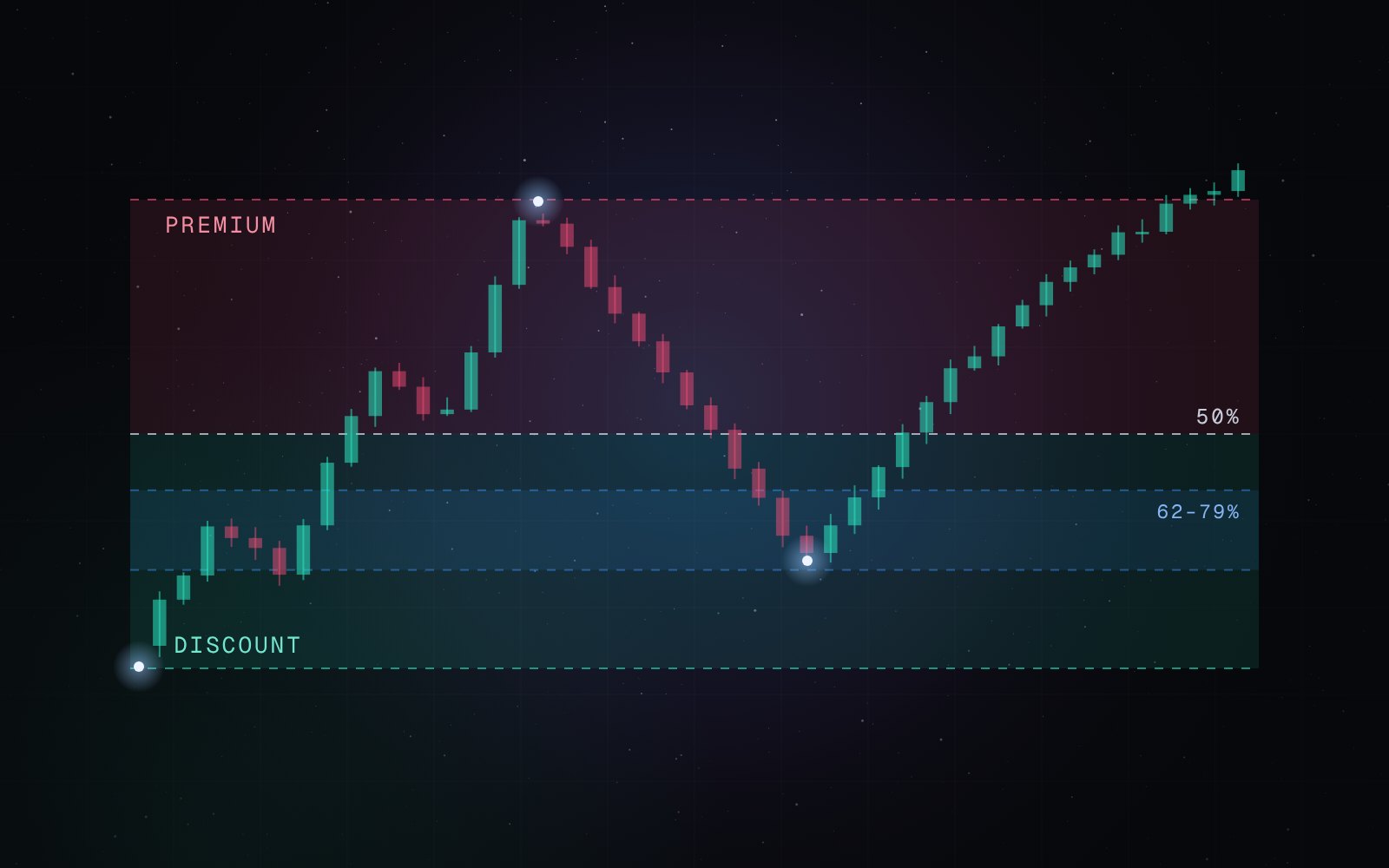
Every move has a range: from the swing low to the swing high, or the other way round. Splitting that range in half gives you one of the simplest and most useful filters in price action – premium and discount.
Drawing the range
Take the last clear swing that broke structure. In an up move, draw from the swing low to the swing high; in a down move, from the swing high to the swing low. The Fibonacci tool in TradingView does this in one step – the 0.5 level is the middle of the range, also called equilibrium.
Premium and discount
- Discount: the lower half of the range. In an uptrend, this is where buyers get the better price.
- Premium: the upper half of the range. In a downtrend, this is where sellers get the better price.
- Equilibrium: the 50 % level – the fair middle between both.
Why it helps
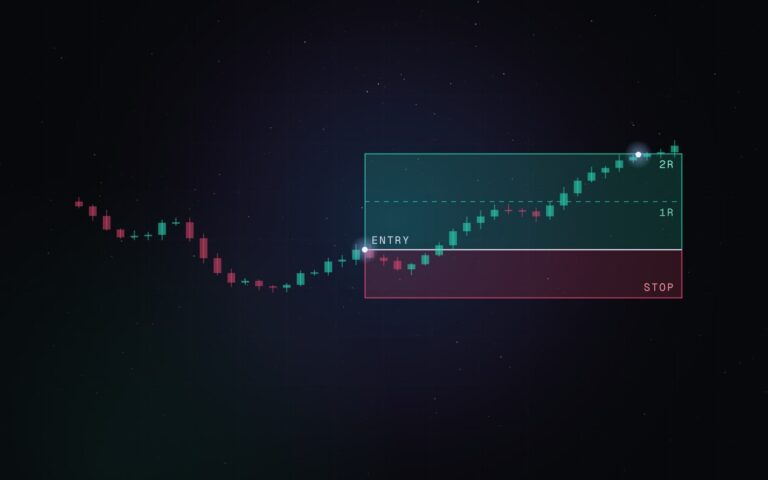
Buying in discount and selling in premium means you enter where the risk to your stop is small compared with the distance to the target. The same setup simply has a better risk-reward ratio when it forms in the right half of the range.
The optimal trade entry zone
Many traders focus on the area between the 62 % and 79 % retracement of the range. It lies deep in discount (or premium) and often lines up with order blocks or fair value gaps – a popular area to look for entries.
Putting it together
- Find the direction on the higher timeframe.
- Draw the range of the last impulse.
- Wait for price to return into discount (uptrend) or premium (downtrend).
- Look for an order block or a fair value gap inside that half.
- Enter on your trigger, stop beyond the range extreme, target the opposite end and beyond.
Educational content. It is not investment advice and not a recommendation to buy or sell. Risk disclosure