Order blocks: where strong moves start
What an order block is, three checks for a valid one, and how traders combine it with market structure to plan entries.
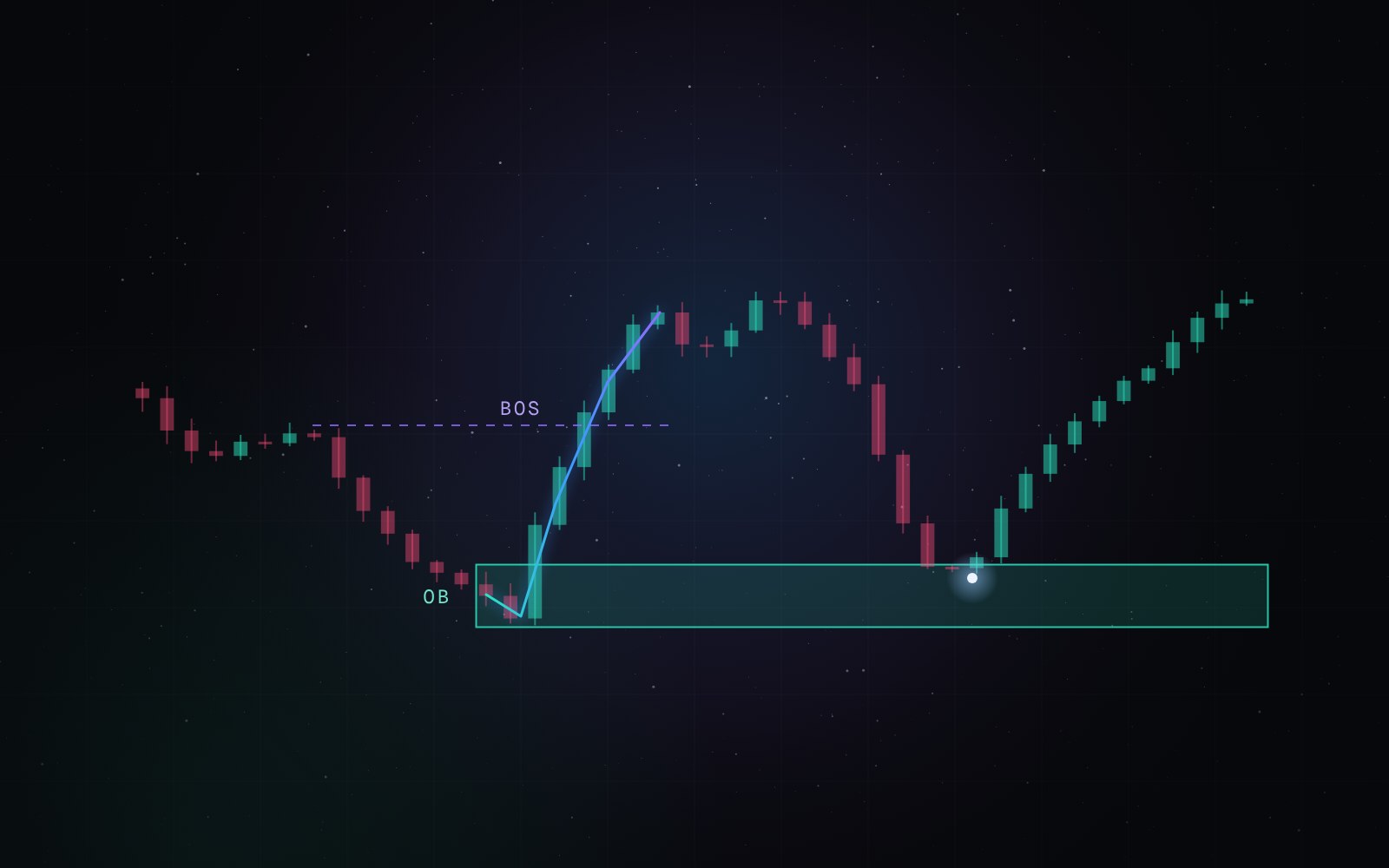
An order block is the last opposite candle before a strong move that breaks market structure. The idea behind it: large orders were filled in that area, and when price comes back, the remaining interest often makes it react again.
What an order block is
A bullish order block is the last down candle before an impulsive move up that breaks a swing high. A bearish order block is the last up candle before an impulsive move down that breaks a swing low. Most traders mark the whole candle from high to low; some use only the body for a tighter zone.
Three checks for a valid order block
- Strong move away: large candles with little overlap, often leaving a fair value gap behind.
- Break of structure: the move takes out the last swing high or low.
- Still fresh: price has not traded back into the block yet.
How traders use them
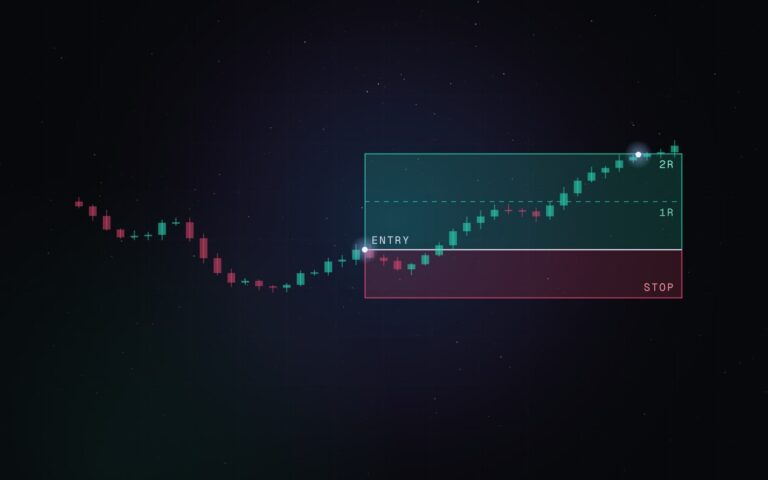
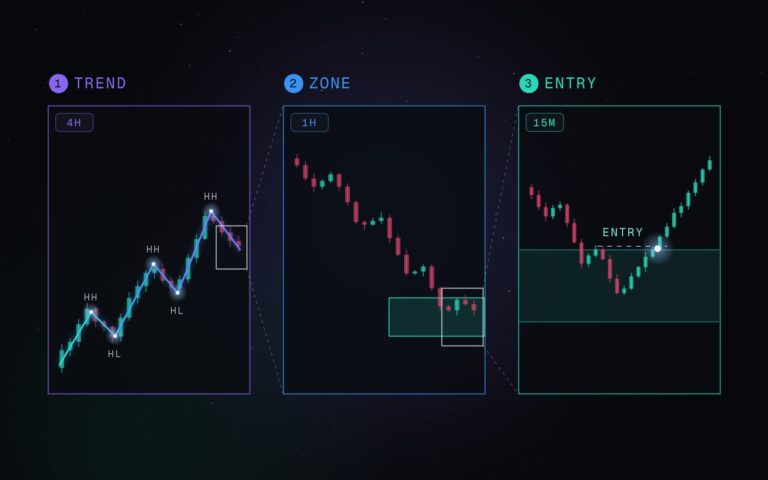
The classic plan is simple: wait for price to return to the block, look for a reaction on a lower timeframe, place the stop beyond the block and aim for the next obvious liquidity, such as the opposite swing high or low.
Order blocks and market structure
Order blocks in the direction of the trend – created by a break of structure – are the most popular. A block that forms with a change of character can mark the start of a new trend and is often the first area traders watch after the turn.
Fresh or mitigated
Once price has traded back into a block, it is called mitigated. Like any zone, each return uses up some of the orders that were waiting there. A fresh block therefore carries more weight than one that has been tested several times.
Quick checklist
- Does the block point in the direction of the higher timeframe?
- Did the move out of it break structure?
- Is there a fair value gap above or below the block?
- Is the block still fresh?
- Is the next target far enough away for a good risk-reward ratio?
Educational content. It is not investment advice and not a recommendation to buy or sell. Risk disclosure