The economic calendar: trading around NFP, CPI and rate decisions
Which releases move the markets most, when they come out, what happens to spreads – and three ways to handle news in your trading.
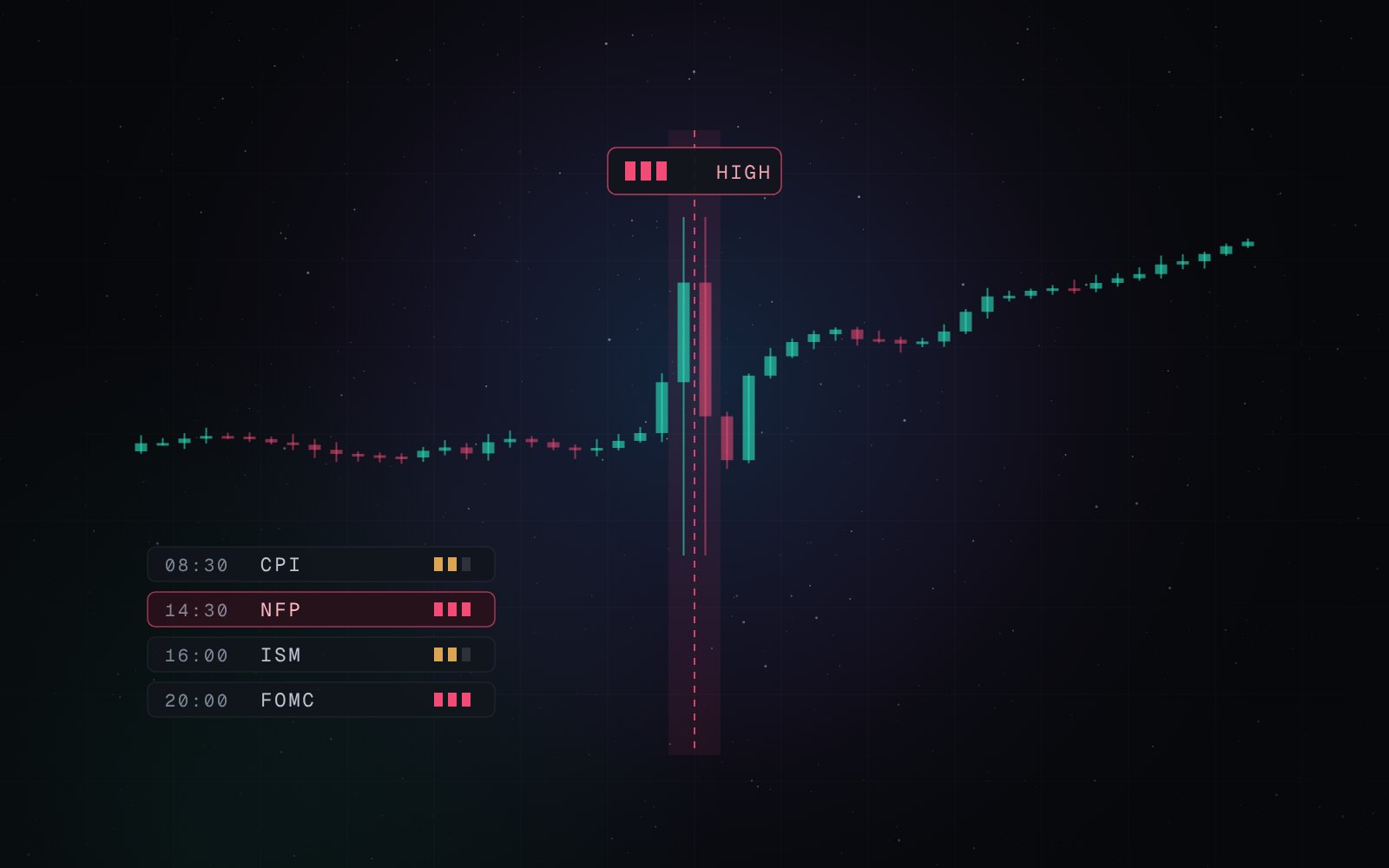
A few scheduled releases move the markets more than anything else in the week. Knowing when they come out is part of every good trading plan – it protects open trades and helps you pick the right moments.
The releases that matter most
- US jobs report (NFP): usually the first Friday of the month, 8:30 New York time.
- US inflation (CPI): once a month, 8:30 New York time.
- Fed rate decision (FOMC): eight scheduled meetings a year, statement at 14:00 New York time.
- Rate decisions of the ECB and the Bank of England, plus inflation and jobs data from the eurozone and the UK.
What happens at the release
In the minutes around a high-impact release, liquidity thins out, spreads widen and price can jump several levels at once. Stops may be filled at a worse price than planned. After the first spike, the market often settles and shows its real direction.
Three ways to handle news
- Stay flat: no new trades from about 15 minutes before until 15 minutes after the release.
- Protect open trades: move the stop to break-even, take partial profits or reduce the position before the release.
- Trade the reaction: wait until the first move is over and look for a sweep or a break at the key levels.
Use the calendar every day
Check the calendar each morning and filter for high-impact events in the currencies you trade. TradingView has an economic calendar built in, and the release times line up with the trading sessions – which is why the New York open is often the busiest moment of the day.
Educational content. It is not investment advice and not a recommendation to buy or sell. Risk disclosure